
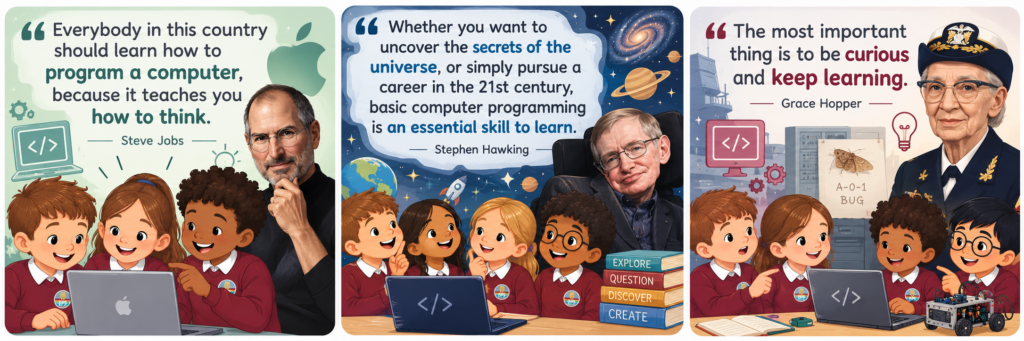
At Darton Primary School, our Computing curriculum is an exciting journey into the digital world.
We want children to enjoy exploring technology, developing new skills and understanding how computing shapes the world around them. We encourage children to be curious, creative and confident digital learners who ask questions, solve problems and discover how technology can be used to make a difference.
Computing lessons are engaging and practical, helping pupils to develop a strong understanding of computer science, information technology and digital literacy. Children learn how computers work, how to create and debug programs, how to use technology to design and create digital content, and how to stay safe and responsible online.
We bring computing to life through hands-on activities, creative projects and real-world challenges. Children might design and create digital artwork, develop animations, program robots, explore data or write their own computer programs. These experiences help pupils make meaningful links between their learning and the technology they encounter in everyday life.
Hands-on learning is at the heart of our Computing teaching. Pupils enjoy using a range of digital devices, software and programming tools to investigate ideas, experiment with solutions and bring their creations to life. They learn to think logically, follow instructions, recognise patterns, solve problems and persevere when things do not work as expected.
As children move through the school, they develop important computing skills and knowledge, building on prior learning through carefully sequenced experiences. They become increasingly confident in programming, creating digital content, handling information and using technology effectively. Online safety is woven throughout our curriculum, helping pupils understand how to protect themselves, make responsible choices and treat others respectfully in the digital world.
By the time pupils leave our school, we want them to be confident, creative and responsible digital citizens who can think computationally, solve problems independently and use technology purposefully. Above all, we want our pupils to leave Darton Primary School ready to embrace future opportunities, adapt to an ever-changing digital world and use technology safely, thoughtfully and creatively.
At Darton Primary School, our Computing curriculum aims to inspire children to become confident, creative and responsible digital learners who understand how technology works and how it can be used to solve problems, communicate ideas and make a positive difference. Through a carefully sequenced, two-year curriculum cycle, pupils develop the knowledge and skills needed to understand computer science, use information technology effectively and become digitally literate. Using the Teach Computing resources from the National Centre for Computing Education (NCCE), our curriculum provides a structured and progressive approach to learning, ensuring that pupils build securely on prior knowledge and develop a strong understanding of key computing concepts.
Through engaging, practical learning experiences, pupils explore programming, algorithms, data and information, computer systems, digital content and online safety. They develop computational thinking by learning to break down problems, recognise patterns, create and debug programs, and evaluate their own work. Our curriculum encourages children to experiment, think logically, persevere when faced with challenges and apply their learning in different contexts. Online safety is woven throughout Computing, equipping pupils with the knowledge and understanding to protect themselves, make responsible choices and interact respectfully in an increasingly digital world. Computing is also embedded across the wider curriculum, enabling pupils to apply their digital skills creatively and purposefully in subjects such as English, Art and other areas of learning. Our curriculum reflects our school values of inclusion, positivity, kindness, respect, honesty and curiosity, ensuring that every child is supported and challenged to develop the knowledge, skills and confidence needed to participate successfully in the digital world.
Ultimately, we want our children to leave Darton Primary School as confident, capable and responsible digital citizens, equipped with a secure foundation of computing knowledge, strong problem-solving skills and the creativity to use technology purposefully. We aim to nurture curious learners who can think critically, adapt to new technologies, recognise the opportunities and risks of the digital world, and use their skills to make a positive contribution to society, ready to Aim High, Work Hard, Achieve Together.
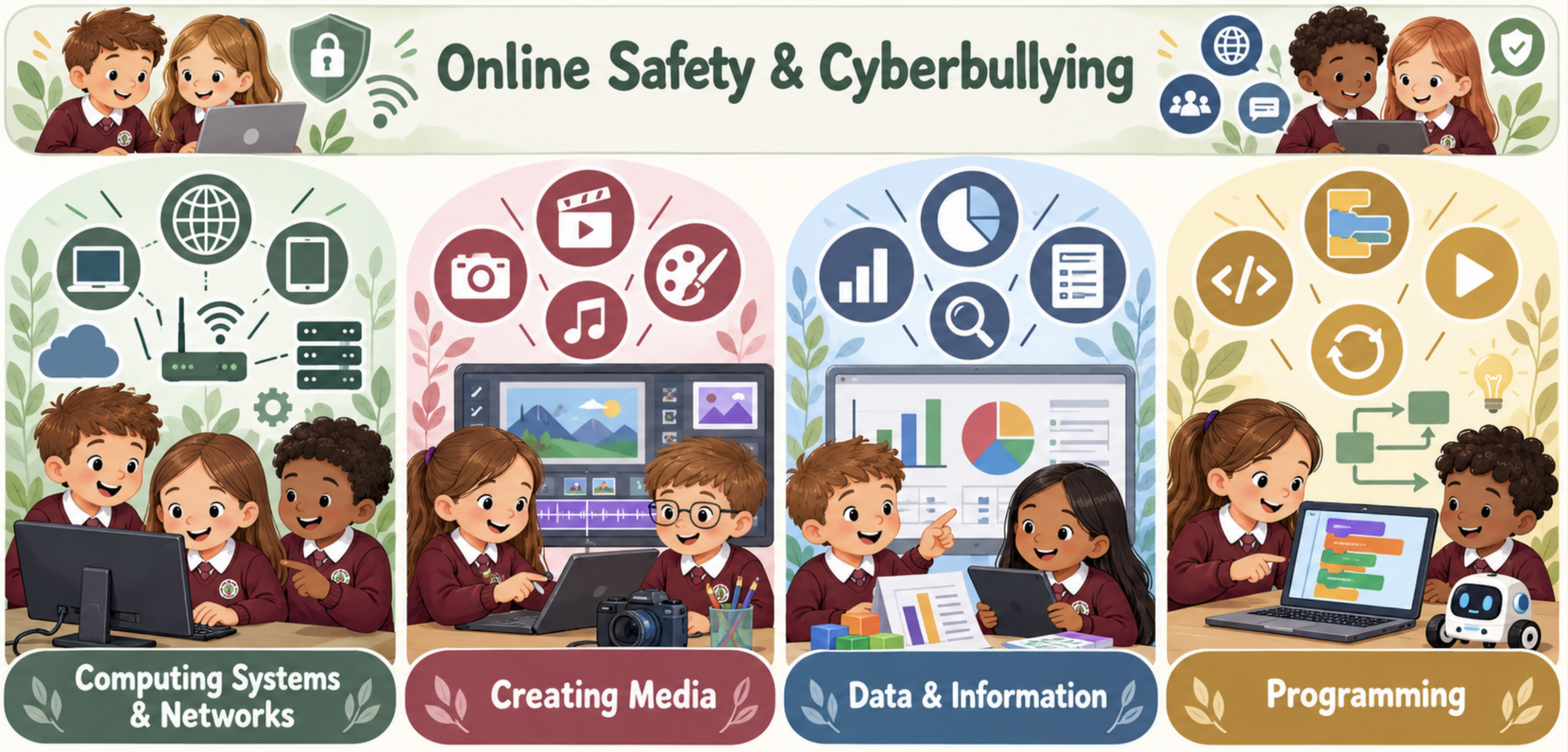
At Darton Primary School, Computing is taught as a discrete subject and meaningfully integrated across the wider curriculum, providing opportunities for pupils to apply their digital skills in subjects such as English, Art and other foundation subjects. Technology is used creatively to enhance learning, develop independence and raise pupils’ engagement, confidence and aspirations. Our rich and varied Computing curriculum equips children with the knowledge and skills they need to navigate an increasingly digital world and thrive in the 21st century.
The Accelerated Learning Cycle (ALC), based on the work of Alistair Smith, underpins teaching and learning across all subjects, including Computing. It promotes a supportive yet challenging learning environment through active engagement, multisensory experiences, opportunities for pupils to demonstrate their understanding in different ways, and purposeful consolidation of learning.
Our curriculum organisers support the planning and delivery of carefully sequenced lessons, ensuring pupils develop a secure understanding of key knowledge and concepts over time and can apply their learning in a range of contexts. Computing is delivered through knowledge-rich units that combine explicit teaching with practical, hands-on activities. Using the NCCE Teach Computing resources, our two-year curriculum cycle provides pupils with opportunities to explore a broad range of computing concepts, develop practical skills and understand how digital technology works and how it can be used safely, creatively and effectively
Formative assessment is embedded throughout Computing lessons, enabling teachers to identify pupils’ understanding, address misconceptions and adapt teaching in response to learners’ needs. Through questioning, discussion, observation and the evaluation of pupils’ work, teachers assess progress and provide appropriate scaffolding, adult support and challenge to ensure all pupils can succeed.
Summative assessment, alongside regular reviews of pupils’ work and curriculum coverage, helps teachers and leaders evaluate the effectiveness of the curriculum, identify gaps in knowledge and plan appropriate next steps. Curriculum documents are reviewed and updated to monitor progression and ensure that key knowledge and skills are revisited and built upon over time.
As a result, pupils develop the knowledge, confidence and practical skills to use technology purposefully, solve problems, think logically and create digital content. They build upon prior learning through a coherent curriculum sequence, preparing them to use technology safely, responsibly and independently in their learning and future lives.
39808294801211696732HCAT Computing Curriculum